Marking Nut (Bhallataka)
Semecarpus anacardium
| Family | Anacardiaceae |
|---|---|
| Sanskrit | Bhallataka |
| हिंदी | भिलावा |
| മലയാളം | ചേർക്കുരു |
| Parts used | fruit |
Poisonous without classical processing — not offered — Vesicant oil; used only after shodhana
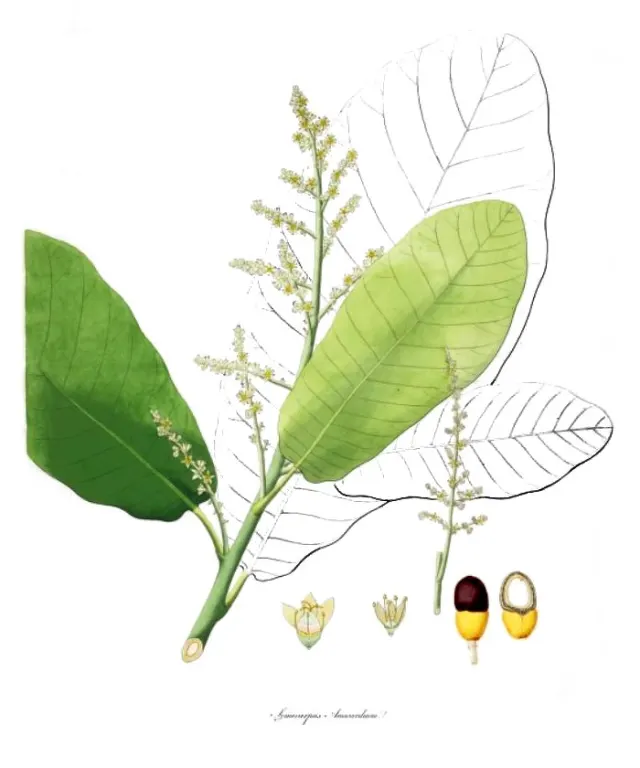
Marking nut is a deciduous tree related to the cashew, with large leathery leaves, small greenish-yellow flowers and black, heart-shaped nuts seated on a fleshy orange cup. It is native to India, from the outer Himalayas to the Coromandel Coast, and grows in dry forests across the country.
The fruit, called Bhallataka, appears in classical Ayurvedic formulations traditionally used for joint comfort. Its black, oily juice was used to mark laundry. The nut contains a strongly irritant oil that blisters the skin, so it is poisonous and used only after classical purification (shodhana) under qualified supervision.
Articles are for general information about Ayurveda and personal care and are not medical advice. For any health condition, please see a qualified doctor.